
Discover the essential Amazon private label requirements for launching your brand. Learn about product guidelines, branding, compliance, and more to succeed in the competitive marketplace.
Introduction
Overall, starting a private label business on Amazon is an immensely profitable endeavor and the perfect opportunity for a new business. However, it needs to be done in compliance with Amazon’s guidelines. Whether you are developing your brand or trying to capitalize on the massive opportunity that is in the Amazon marketplace, knowledge about private labeling is going to be key. In this seven-part guide, we’ll go through all of the essentials to understand Amazon’s private label program, how to source goods and services, and the legalities of branding. If you follow these guidelines, you’ll be on the right track to developing a solid private-label business selling on Amazon.
What is Private Labeling on Amazon?
Private labeling on Amazon is a process of buying cheaper products from manufacturers and then selling them on Amazon as your unique brand. It isn’t that you are putting out a product to market it using the images already created by other brands for their product, but you are coming up with a new brand name for your product. It puts you in the driving seat in terms of the price factors, branding and marketing, which assist in a clear distinction of their products in the market.
Amazon Private Label Requirements
Starting an Amazon Private Label business involves creating and selling products under your own brand on Amazon. Here are the key requirements and steps to get started:
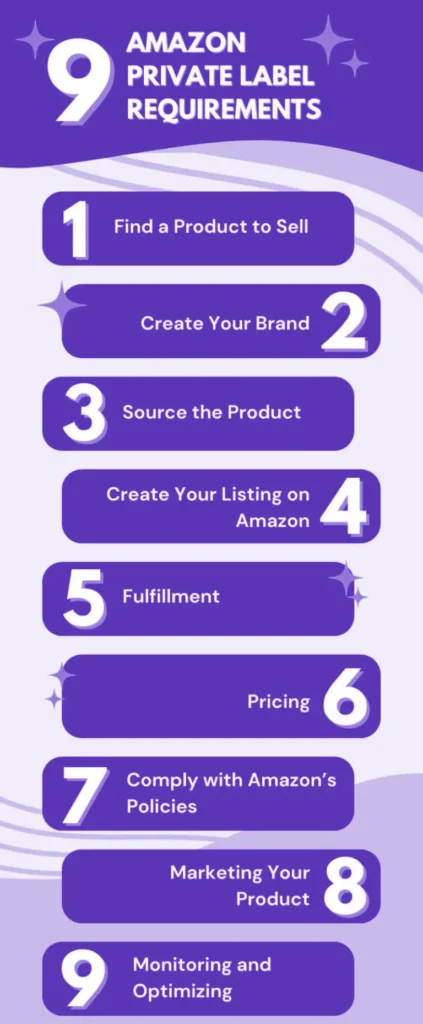
1. Find a Product to Sell
- Product Research: Identify a product with demand and low competition. You can use tools like Jungle Scout, Helium 10, or AMZScout for product research.
- Quality: Ensure the product is of good quality and meets consumer expectations. It’s important to order samples before committing.
- Market Demand: Check if there’s a consistent demand for the product by analyzing the competition and sales data.
2. Create Your Brand
- Brand Name: Choose a brand name that is memorable and relevant to the product you’re selling.
- Logo & Packaging: Design a professional logo and packaging that resonates with your target audience.
- Brand Registry: Enroll your brand in the Amazon Brand Registry. This helps protect your brand, provides better control over your listings, and allows access to enhanced marketing tools like A+ Content.
3. Source the Product
- Find Suppliers: Use platforms like Alibaba or Global Sources to find suppliers. You can negotiate prices and MOQ (Minimum Order Quantity) with manufacturers.
- Private Label Agreement: Ensure that the supplier can place your branding on the product and provide customization if needed (e.g., packaging or labeling).
- Samples: Order samples to verify quality before committing to a full order.
- MOQ: Be aware of the minimum order quantities, which can vary depending on the supplier.
4. Create Your Listing on Amazon
- Product Title: Craft a compelling and keyword-optimized product title. Include relevant keywords for SEO.
- Bullet Points: Use clear, concise bullet points to highlight the key features and benefits of the product.
- Product Description: Write an engaging product description with key selling points and include high-volume keywords.
- Images: High-quality product images are essential. Amazon recommends at least 1,000 pixels on the longest side. Include lifestyle photos, close-ups, and various angles.
5. Fulfillment
- Fulfillment by Amazon (FBA): Amazon FBA is the most popular option. You send your products to Amazon’s warehouse, and Amazon handles storage, packing, shipping, and customer service.
- Fulfillment by Merchant (FBM): Alternatively, you can handle the shipping and fulfillment yourself, but FBA offers better visibility and convenience for most sellers.
6. Pricing
- Competitive Pricing: Set a price that is competitive while covering your costs (including manufacturing, shipping, Amazon fees, and marketing).
- Amazon Fees: Understand Amazon’s fee structure, including referral fees, FBA fees, and other charges.
7. Comply with Amazon’s Policies
- Amazon’s Rules and Regulations: Ensure that your product complies with Amazon’s rules and regulations (e.g., safety, labeling, trademarks).
- Product Compliance: For certain product categories (e.g., electronics, supplements), ensure you meet any legal requirements or certifications.
8. Marketing Your Product
- Amazon PPC: Invest in Amazon’s Pay-Per-Click (PPC) ads to gain visibility and drive sales.
- Social Media & Influencers: Leverage social media and influencer marketing to build awareness of your product.
- Deals and Coupons: Consider offering time-limited discounts or using Amazon’s promotions to increase sales velocity.
9. Monitoring and Optimizing
- Customer Reviews: Gather positive reviews to build credibility. Ensure you provide excellent customer service to maintain a good rating.
- A/B Testing: Experiment with different titles, images, and descriptions to optimize your listings for higher conversions.
- Track Sales Data: Use Amazon’s Seller Central to track your sales, inventory levels, and performance.
Additional Considerations:
- Product Liability Insurance: Depending on the type of product, you might need product liability insurance.
- Trademarks and Patents: Consider trademarking your brand and check for any potential patent issues with your product.
- Customs and Import Taxes: If sourcing products internationally, be aware of import taxes, customs duties, and regulations related to your product.
With these steps, you’ll be on your way to launching a private label business on Amazon. Would you like more details on any of these steps or specific tools to help with research?
The Importance of Amazon’s FBA (Fulfillment by Amazon) in Private Labeling
Selling through the Amazon platform requires the use of Fulfillment by Amazon, commonly referred to by the abbreviation FBA. FBA is a service that enables you to make your products available in Amazon’s fulfillment centers so that Amazon takes responsibility for sheltering your products and processing your orders.
FBA Packaging and Labeling Requirements: When selling through FBA, sellers must adhere to certain measures of packaging and labeling set down by Amazon. These guidelines make sure that your products are well-packaged and prepared for transportation and or delivery. FBA requirements entail affixing FNSKU to the product and ensuring that your product is well packaged to withstand some hardship during its journey to the FBA Center.
Amazon’s Role in Returns and Customer Service: FBA also assists in the issue of returns and customer services to the clients. Another disadvantage, which is actually not entirely unfavorable, is that when a customer does not like your product, they can return it through Amazon, and this relieves you of the stress of handling returns and focusing on expanding your private label business.
Steps to Start Private Labeling on Amazon
To successfully launch a private label product on Amazon, follow these steps:
- Find a Profitable Niche: Make a proper market analysis to find out what kind of specialized products are required from the market but are not flooded by competitors.
- Source a Reliable Supplier: A good manufacturer or supplier should be found so that good quality privately labeled products can be manufactured. They are able to provide products that will meet Amazon’s standards of product quality and safety.
- Design Your Packaging and Branding: Design packaging that fulfills your brand’s image and meets Amazon’s policies on packaging.
- Create an Optimized Listing: Get yourself an effective Amazon listing with the use of relevant keywords, eye-catching product images, and alluring product descriptions.
- Ship Products to Amazon FBA: List your products on Amazon and then ship them directly to Amazon’s fulfillment centers, where they will be sorted based on your instructions.
Common Challenges in Meeting Amazon Private Label Requirements
Launching a private label business on Amazon isn’t without its challenges. Some common hurdles include:
- Sourcing Quality Products: It is always a challenge to get a supplier that can offer products of the desired quality that meets the standards of Amazon.
- Navigating Amazon’s Policies: Amazon has many rules that can be quite rigid at times, particularly as far as product safety and originality are concerned.
- Protecting Your Intellectual Property: Policing of brands is important; however, this involves an appreciation of trademark, Amazon Brand Registry, and figuring out the counterfeiter.
Tools and Resources for Navigating Amazon Private Label Requirements
There are several tools and resources available to help sellers meet Amazon’s private label requirements:
- Software for Product Research: Jungle Scout or Helium 10 is helpful here to figure out what kind of products will potentially be popular in terms of sales.
- FBA Management Tools: Documents such as the FBA Inventory Management Spreadsheet and Amazon Toolbox can be useful when working through issues with your inventory to get your products up to par with Amazon standards by using tools like ShipBob or SellerApp.
- Legal Resources: If you are having trouble with trademarks or other issues concerning intellectual property, you might want to seek help from an attorney, or you can turn to services like Legal Zoom to get your brand’s identity secure.
FAQs
What is the best way to find a supplier for Amazon private labeling?
The seekers can locate qualified suppliers through websites such as Alibaba, ThomasNet and Global Sources. When selecting suppliers, ensure you check and read the customer’s feedback as well as request their product samples before you place a large order for your store.
Do I need to register my brand with Amazon?
Yes, registering your brand with the Amazon Brand Registry provides additional protections against counterfeit products and allows you to access advanced marketing tools.
How long does it take to launch a private-label product on Amazon?
It can take a few weeks to get the products, get your branding done and then send the products to Amazon FBA. The whole process could take from 1 to 3 months.
Can I sell private label products without using Amazon FBA?
Yes, Amazon FBM (Fulfilled by Merchant) means you can complete orders on your own. Nevertheless, FBA is advised to be more efficient because it saves time having Amazon deal with storage, shipping, and customer relations.
What are the common mistakes to avoid when starting with private labeling on Amazon?
Such mistakes may include:
- Manufacturing low-quality products.
- Lack of adequate research on your niche or topic.
- Not meeting the Amazon product safety code.
Conclusion
Establishing a private label business through Amazon involves the right strategies that need to be adopted properly in order to enhance success. In doing so, the envisaged third-party sellers shall also meet the other standards that Amazon has set for private label products by ensuring that they meet the required quality standards, have appropriate labeling, and meet the intellectual property rights standards as well as the compliance standards that Amazon has formulated.
Private labeling on Amazon is incredibly lucrative if done correctly, but one needs to invest time in learning Amazon’s policies. This way, you will be able to build a very strong brand, follow up with the best services provision, and by so doing, see your private label business soar.


